
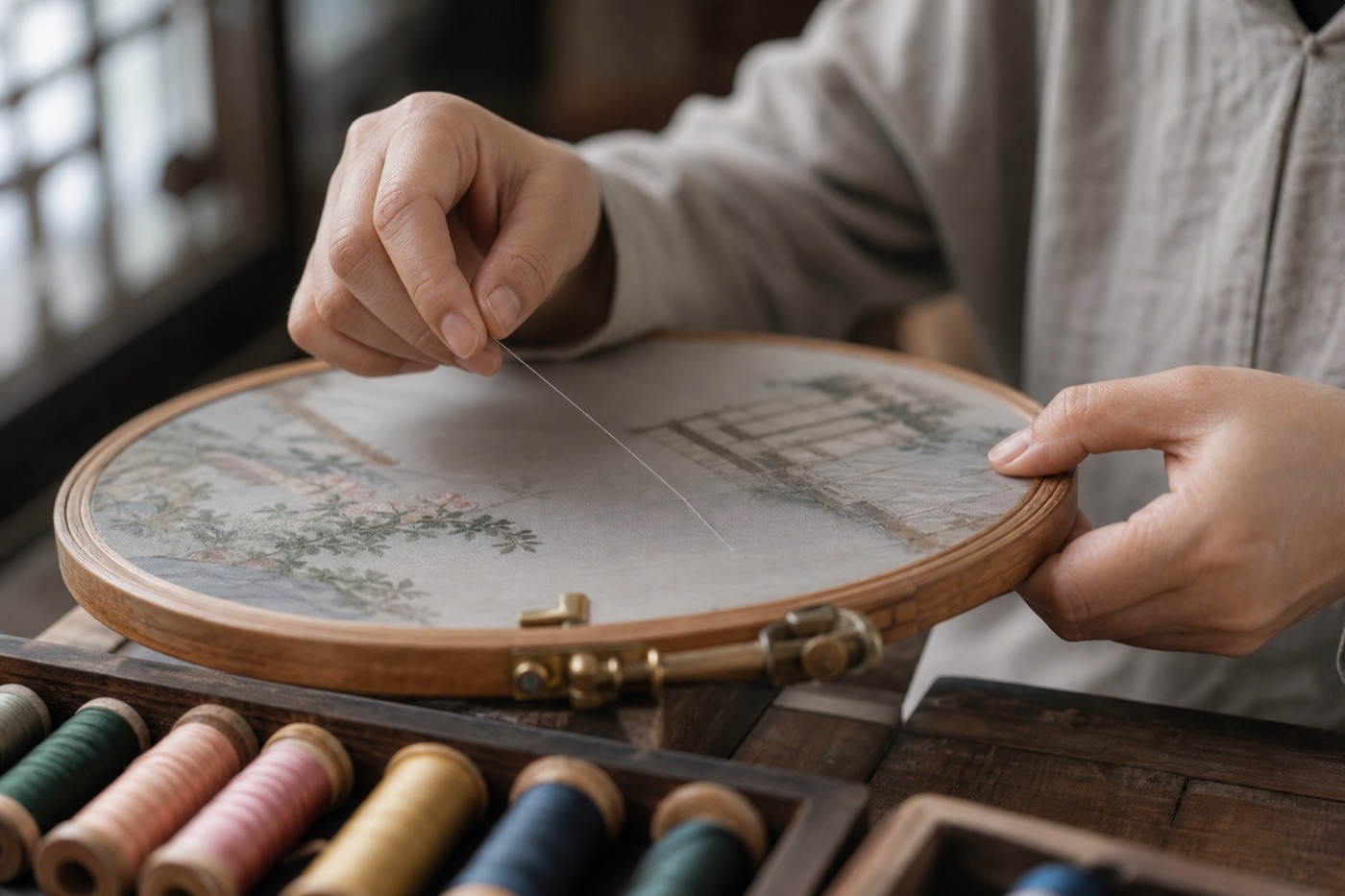
Suzhou embroidery has dressed scholars and courts for a thousand years, and has stood on China's national list of intangible cultural heritage since 2006. On a 38-millimetre dial, our embroiderers work in flat, seed, water-road and gold-couched stitches, splitting silk thread to a fraction of its width. What printing fakes in a second, a needle earns in days.
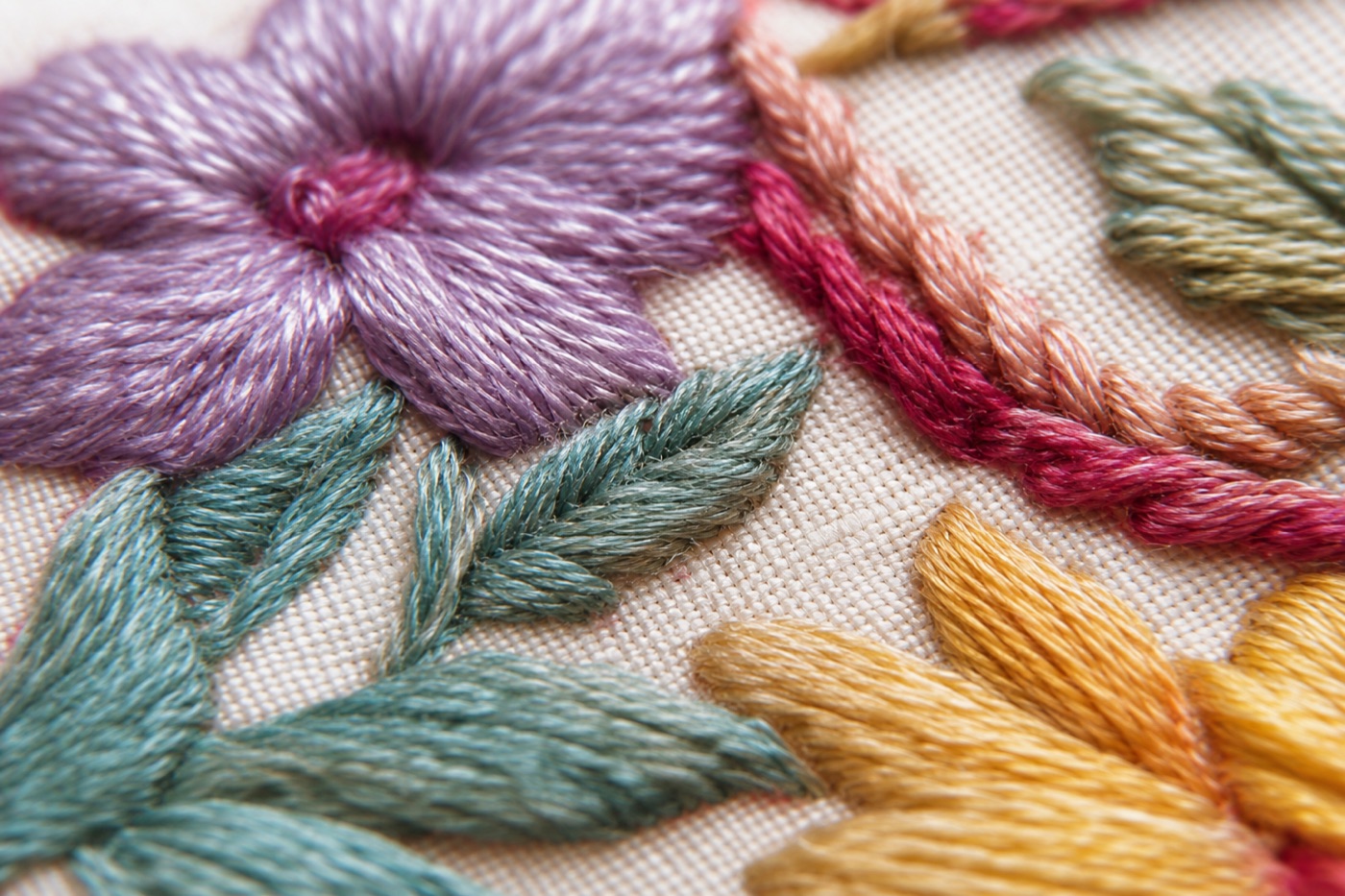
Every watch arrives with its making-of record — hours, stitch techniques, macro photography — and an NFC certificate tying the numbered piece to those records. The silk itself is sent for ISO light-fastness, perspiration and humidity testing, because "it lasts" is something you prove, not something you write.
We do not forecast demand and print to it. Each edition is numbered and capped by what the atelier's hands can actually stitch — when a dial sells out, the answer is a waiting list, not a machine.